Experience luxury workspaces: JustCo at One Bangkok , ServCorp at Dusit Central Park
Inquire Now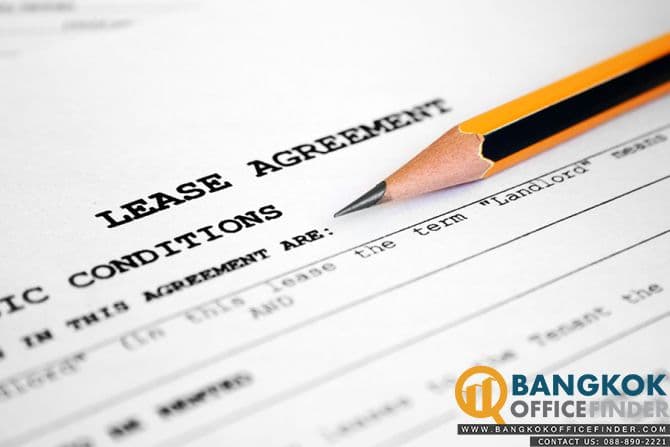
Residential properties such as condominiums or apartments are typically leased on a year-to-year basis, providing a level of flexibility that is suitable for both tenants and landlords. On the other hand, retail spaces in shopping malls are commonly leased under 3-year agreements, as most businesses cannot realistically recover their investment within just a single year.
The standard lease term for different types of properties or real estate assets naturally varies depending on the intended use of the property and the practical benefits expected from occupying that space.
Residential properties such as condominiums or apartments are typically leased on a year-to-year basis, providing a level of flexibility that is suitable for both tenants and landlords. On the other hand, retail spaces in shopping malls are commonly leased under 3-year agreements, as most businesses cannot realistically recover the investment required to launch a new branch or business—especially when significant capital is needed for interior fit-out and setup—within just one year.
As you can see, whether a lease term is short or long often depends on the level of investment involved, as well as the complexity and inconvenience associated with moving into or out of the property. For example, condominiums are usually leased fully furnished, allowing tenants to move in immediately with minimal setup. Commercial spaces, however, are typically delivered as vacant units, with tenants responsible for fit-out costs. Landlords therefore often provide a “rent-free period” to allow tenants time to complete interior construction before operations begin.
Even within the same type of property usage, standard lease terms may still differ. For example, retail space in shopping malls generally follows a 3-year lease structure, whereas temporary retail booths or market stalls—where little or no fit-out investment is required—may operate under annual, monthly, or even daily agreements.
For office leases, the standard lease term is typically 3 years. This is largely due to the significant investment involved each time a company relocates—covering not only new office fit-out costs, but often demolition and reinstatement costs at the previous office as well. In addition, most companies record these investments as depreciable assets over multiple years. As a result, tenants rarely seek extremely short lease terms, while landlords also prefer longer agreements that provide stable and predictable cash flow.
One of the most common questions is: can a tenant sign an office lease shorter or longer than 3 years?
For lease terms longer than 3 years, the answer is yes. However, under Thai law, leases exceeding 3 years must be officially registered with the Land Department, with a registration fee equal to 1% of the total rental value throughout the lease period (excluding service charges). In most cases, the tenant is responsible for these registration costs—unless the long-term lease is specifically requested by the landlord, in which case responsibility may be negotiated between both parties.
For shorter lease terms, the law does not prohibit such agreements. However, most landlords strongly prefer the standard 3-year structure. Some landlords may accept shorter lease terms, while others may refuse entirely, or more commonly apply a higher rental rate—often referred to as a rental premium—to compensate for increased income volatility and leasing risk.
Tenants should also remember that shorter lease terms create more frequent opportunities for landlords to adjust rental rates. In most cases, once a lease expires and both parties wish to renew, rental rates will be renegotiated based on prevailing market conditions at that time—or according to whatever terms both parties agree upon.
For small or medium-sized companies, especially startups, there may be concerns about future business uncertainty. The company may grow faster than expected, require additional space, need to downsize, or even terminate operations earlier than planned. As a result, these businesses often prefer shorter lease commitments.
Today, one of the best solutions for this type of concern is leasing a “Serviced Office.” This office format offers much greater flexibility in lease duration—ranging from monthly agreements to 3-month, 6-month, or annual contracts—while also eliminating the need for large upfront investment in office fit-out and furniture.
At first glance, office leasing may seem straightforward to those without deep real estate experience. However, when viewed strategically—with the goal of maximizing flexibility, negotiation leverage, and long-term cost efficiency—office leasing is often far more complex than it appears, with many important terms that can be negotiated beyond rental rates alone.
BangkokOfficeFinder.com can help negotiate important lease terms on your behalf, such as renewal rights to ensure you have priority if you wish to extend your lease, rental escalation caps to prevent excessive rent increases at renewal, early termination rights in specific circumstances, or even rights to expand or reduce leased space as your business evolves.
We are not just a broker, we are a consulting partner who helps clients save time, reduce risk, and find the office that best fits their business goals at no cost to tenants. If you are looking for office space in Bangkok, the Bangkok Office Finder team is ready to support you from day one until move-in.
Bangkok Office Finder has had the opportunity to advise and support a wide range of organizations, both Thai and international, from small businesses to large enterprises seeking office space in Bangkok that matches their budget, location goals, and brand image.